

For years, digital marketing success was measured by one simple metric: clicks.
If someone searched on Google, saw your website, and clicked through, your marketing was working. But the way people discover information online is changing. Today, many users get the answers they need without ever leaving the search page.
These are known as zero-click searches, and they are becoming increasingly common as search engines integrate AI summaries, featured snippets, and knowledge panels directly into results.
For businesses, this shift raises an important question:
If fewer people click on websites, how do you maintain visibility and brand authority?
The answer isn’t to fight the change. It’s to adapt to it.
What Is Zero-Click Marketing and Why Does It Matter?
Zero-click marketing is the strategy of gaining visibility in search results, AI summaries, and digital platforms without requiring a user to click through to your website.
Instead of relying solely on website traffic, your content and expertise become part of the information people see directly in search results, AI summaries, and answer engines.
It matters because:
- AI-powered search tools now answer questions directly
- Many users never leave the search results page
- Visibility is shifting from websites to platforms
If your brand isn’t part of those answers, you are not part of the decision-making process.

What Is Zero-Click Marketing?
Zero-click marketing focuses on earning visibility and authority even when users don’t click through to your website.
Examples include:
- Google AI Overviews, which summarize answers directly in search results
- Featured snippets
- Knowledge panels
- AI assistants like ChatGPT or Perplexity referencing your content
- Social platforms where users consume information without leaving the feed
In these situations, your brand can still gain recognition, credibility, and influence, even if the user never visits your site.
Why Zero-Click Searches Are Increasing
Search engines have a strong incentive to keep users on their platforms. When answers appear directly in search results, users find information faster and remain within the search environment.
Recent developments accelerating this trend include:
- AI-generated summaries in search results
- Instant answers for common business questions
- Structured data that allows search engines to extract information quickly
- Voice search and AI assistants
As a result, many informational searches now end without a click. Studies have shown that a majority of searches now end without users visiting a website, reinforcing the need for brands to think beyond traditional traffic metrics.
This doesn’t mean your content has lost value. In many cases, your content may still be the source powering those answers.

Why Your Traffic Might Be Dropping
If your website traffic has declined recently, it may not be a performance issue. It may be a shift in how people search.
Common reasons include:
- Users are getting answers directly from AI summaries
- Content isn’t structured in a way AI can easily extract
- Articles are written for humans only, not for both humans and AI systems
- Content doesn’t clearly match search intent
The takeaway is simple. Visibility has not disappeared. It has moved.
Visibility Matters Even Without Traffic
Traditional marketing often focuses heavily on traffic numbers. But visibility and influence are often more valuable than raw clicks.
If a business leader repeatedly sees your brand cited in search results, summaries, or industry discussions, it builds familiarity and trust.
Over time, that trust can translate into:
- Direct website visits
- Branded searches
- Sales conversations
- Referrals
In other words, even when users don’t click immediately, your content may still shape their decision-making.

How Businesses Can Adapt Their Content Strategy
Winning visibility in a zero-click environment requires a slightly different approach to content.
Focus on clear answers
Search engines and AI tools favor content that provides direct, clear explanations to common questions.
Instead of burying answers deep in long articles, structure content so that key information is easy to extract.
Build topical authority
AI systems look for sources that demonstrate consistent expertise across a topic. Publishing thoughtful, well-structured content around a specific subject area increases the likelihood that your insights will be referenced.
Use structured content
Content that is well organized with headings, definitions, and concise explanations is easier for search engines to understand and surface in summaries.
Prioritize expertise and credibility
Search engines increasingly prioritize signals of experience, expertise, authority, and trust. Google continues to emphasize helpful, people-first content as a core ranking factor.
Think beyond website traffic
Visibility can occur across many surfaces, including search results, AI tools, and social platforms. The goal is to ensure your brand appears wherever your audience is looking for information.
How to Get Your Content Picked Up by AI Search
If you want your content to show up in AI-generated answers, it needs to be built differently.
Write content that is easy to quote
Clear definitions, direct answers, and concise explanations increase the likelihood of being referenced.
Use structured formatting
Headings, bullet points, and short sections make it easier for AI systems to scan and extract information.
Add original insights
AI systems prioritize content that offers perspective, not just repetition. Real experience and clear opinions matter.
Build credibility through association
Being mentioned alongside trusted sources strengthens authority signals.
Answer real questions directly
Content that mirrors how people search is more likely to surface in AI results.
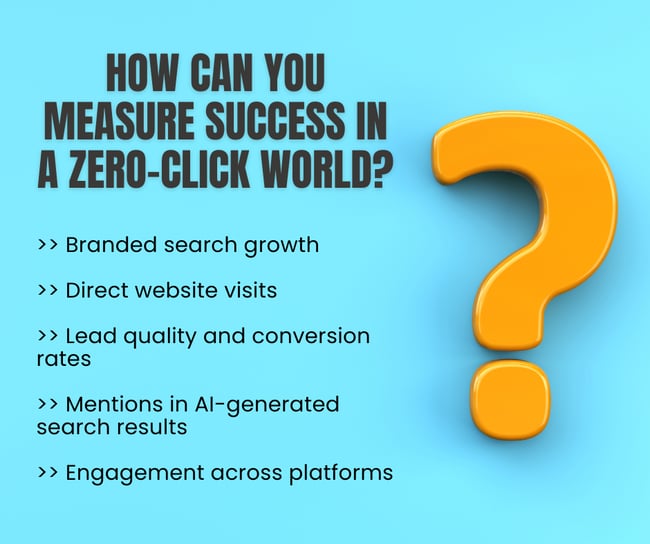
Measuring Success in a Zero-Click World
Traditional metrics like pageviews still matter, but they no longer tell the full story.
Businesses should also pay attention to:
- Branded search growth
- Direct website visits
- Lead quality and conversion rates
- Mentions in AI-generated search results
- Engagement across platforms
These indicators often reveal whether your brand is becoming a trusted source of information.
What Zero-Click Marketing Doesn’t Mean
Zero-click marketing doesn’t replace your website. It changes how people find you.
Your website still plays a role in:
- Converting interested visitors
- Providing deeper information
- Supporting sales conversations
The difference is that discovery often happens before the click now, not after.
The Future of Search Is About Influence
The shift toward zero-click searches doesn’t mean content marketing is becoming less important. If anything, high-quality content matters more than ever.
Businesses that consistently provide helpful, trustworthy information are more likely to be cited, summarized, and referenced across search platforms.
Instead of focusing only on traffic, the most successful brands will focus on influence and authority.
When your expertise shows up wherever people are searching for answers, your brand remains part of the conversation, even before someone visits your website.
The Shift Isn’t Traffic. It’s Control.
For years, brands controlled the experience once someone clicked onto their website.
Now, much of that experience happens before the click.
Search engines, AI tools, and platforms are shaping how your expertise is presented.
The brands that adapt won’t chase clicks. They’ll focus on being the source of the answer.
Frequently Asked Questions
What is a zero-click search?
A zero-click search is when a user finds the answer they need directly on the search results page without clicking on a website.
How can businesses benefit from zero-click marketing?
Businesses benefit by increasing visibility, building trust, and influencing decisions even when users don’t visit their website immediately.
Why is my website traffic decreasing even though rankings are stable?
Traffic may decline because users are getting answers from AI summaries, featured snippets, or other on-page results instead of clicking through.
How do I get my content featured in AI search results?
Content should be clear, structured, easy to scan, and directly answer user questions. Including original insights and credible context also improves visibility.
Does SEO still matter in a zero-click world?
Yes, but it has evolved. SEO now includes optimizing for AI-generated results, not just traditional rankings.