

When people hear inbound marketing, they often think it’s synonymous with blogging. Publish a few posts, wait for Google to notice, and hope leads roll in.
Blog content is an important part of inbound marketing, but it’s only one piece of a much bigger picture. Inbound marketing is a framework for how businesses attract, engage, and nurture leads over time. It’s about building trust before the sales conversation ever starts.
Think of inbound marketing like dating. What you put out into the world determines who’s drawn to you, and whether they feel comfortable taking the next step. The goal isn’t to attract everyone. It’s to attract the right people.
What Is Inbound Marketing (Really)?
Inbound marketing is a strategy focused on attracting potential customers by offering value first, through helpful content, meaningful engagement, and clear pathways forward.
Rather than interrupting people with sales messages, inbound marketing meets them where they already are:
- Searching for answers
- Researching options
- Comparing solutions
- Trying to understand who they can trust
At its core, inbound marketing helps businesses generate leads by educating prospects, clarifying positioning, and building familiarity over time.
How Inbound Marketing Generates Higher-Quality Leads
Inbound marketing works because it pre-qualifies your audience before they ever raise their hand.
When someone finds your website through a blog post, a guide, a social post, or a Google search, they’re already signaling intent. They’re not just discovering your brand. They’re learning how you think and what you stand for.
That means inbound leads tend to be more informed, have clearer expectations, convert faster, and be a better long-term fit
Traffic is often the first step, but traffic alone isn’t the goal. The goal is qualified traffic, people who understand your offer and see themselves reflected in your messaging.

Why Inbound Marketing Can’t Live Only on Your Website
A common mistake businesses make is treating inbound marketing as something that happens exclusively on their blog.
In reality, inbound works best when it’s supported by smart distribution and amplification.
Paid Ads Can Support Inbound (Not Undermine It)
Paid search and paid social can accelerate inbound marketing by putting your best content in front of the right audience faster. Promoting educational content (not just sales pages) helps warm leads before they ever land on a contact form.
Inbound doesn’t mean “never spend money.” It means spending intentionally.
Active Social Engagement Builds Trust Faster
Inbound marketing thrives on connection. That’s why active engagement on social media (commenting, responding, participating in conversations) matters just as much as posting content.
You’re showing up as a real business run by real people. That familiarity lowers the barrier to future conversations.
The key is choosing the right channels. You don’t need to be everywhere. You need to be where your audience actually pays attention.
How to Become an Inbound Marketing Powerhouse
Inbound marketing doesn’t require perfection, but it does require momentum and follow-through. A few principles that consistently separate strong inbound strategies from stalled ones:
Don’t Let Perfect Content Stop You From Publishing
Waiting for the perfect blog post often leads to no blog post at all. Consistent, useful content builds more trust over time than sporadic “perfect” pieces.
Don’t Avoid Spending at All Costs
Inbound marketing isn’t inherently free. Strategic investment (whether in ads, tools, or expert support) often determines whether your content actually reaches the people it’s meant for.
Always Have a Clear Next Step
If someone engages with your content, what should they do next? Book a call, download a resource, follow you on social, or sign up for emails? Clarity matters.
Be Responsive (Even If It’s Automated)
Inbound creates interest. If that interest goes unanswered, it fades. Automated emails, chat tools, and follow-ups still count as inbound. They show prospects you’re paying attention.
-3.png?width=750&height=629&name=Bonafide%20April%20Blog%20Images%20(1)-3.png)
Nontraditional Places to Apply Inbound Marketing Principles
Inbound marketing doesn’t stop at your blog or landing pages. Some of the most overlooked opportunities live elsewhere:
- Google Business Profile updates that answer common questions or share insights
- Thoughtful comments on related or complementary businesses’ social posts
- Email signatures, thank-you pages, and autoresponders that reinforce your value
- FAQs and resource pages that reduce friction and build confidence
Every touchpoint is a chance to educate, reassure, and guide someone forward.
How AI Is Changing Inbound Marketing Strategy
AI is reshaping inbound marketing by making it faster, more personalized, and more responsive, but it doesn’t replace strategy.
Inbound marketing still focuses on attracting the right audience, building trust, and guiding prospects forward. AI supports those goals by helping teams analyze data, personalize engagement, and respond to leads more efficiently.
When used well, AI strengthens inbound execution, not decision-making.
How AI Supports Inbound Marketing
AI helps inbound teams work smarter by reducing manual effort and improving relevance. Common applications include:
- Identifying content opportunities based on search and engagement patterns
- Repurposing inbound content across channels more efficiently
- Personalizing email and nurture paths based on user behavior
- Supporting faster responses through chat and automation tools
These capabilities help businesses stay visible, consistent, and responsive across the buyer journey.
Why Inbound Strategy Still Needs Human Direction
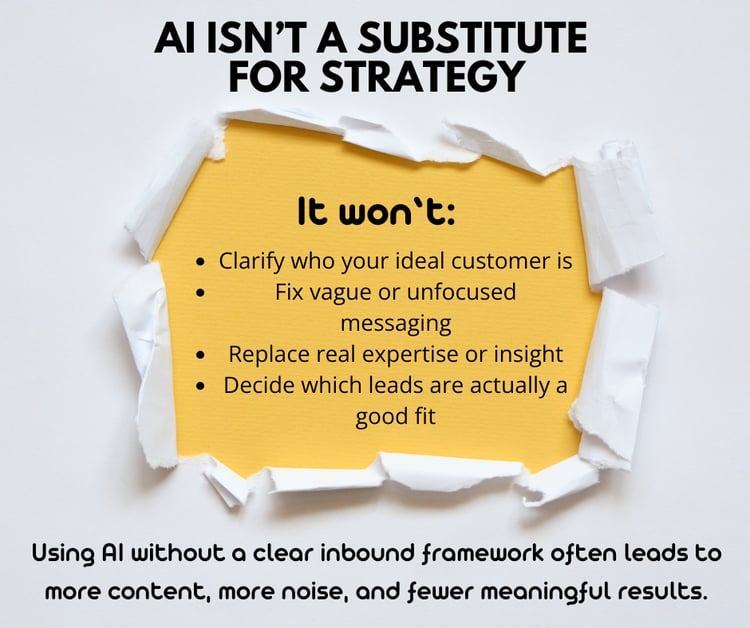
AI can generate content and surface insights, but it cannot define positioning, messaging, or audience fit. You need humans involved in the process to do that.
Inbound marketing still depends on clear differentiation and brand voice, strong understanding of buyer intent, thoughtful content grounded in real expertise, and strategic decisions about channels and next steps.
Without those fundamentals, AI simply accelerates output, not results.
AI Improves Responsiveness, Which Improves Conversion
One of AI’s biggest impacts on inbound marketing is speed. Prospects expect timely responses, even early in the research phase.
AI-powered chat, automated follow-ups, and smart routing help ensure interest is acknowledged quickly. When implemented thoughtfully, automation supports trust rather than replacing human interaction.
Faster response times keep inbound leads engaged and moving forward.
Bottom Line: AI Amplifies Strong Inbound Marketing
AI does not fix unclear messaging or weak strategy. But when inbound fundamentals are in place, AI amplifies what’s already working: helping the right content reach the right audience and supporting more timely engagement at scale.
Inbound marketing remains rooted in attraction, alignment, and trust. AI simply enhances the systems that support it.
Attract the Right Leads by Being Clear About Who You Are
Inbound marketing works best when your messaging is honest and specific. Vague positioning attracts vague leads. Clear positioning attracts people who already feel aligned.
Not everyone should be interested in your business, and that’s a feature, not a flaw.
When inbound marketing is done well, it filters as much as it attracts. It saves time. It builds trust. And it turns marketing into something that works with your audience instead of chasing them.
A Softer Way Forward
Inbound marketing isn’t about doing more. It’s about doing things with intention. Knowing what to say, where to say it, and how to support people once they show interest makes all the difference.
If you’re thinking about how inbound marketing could work harder for your business, but want a strategy that feels realistic, sustainable, and aligned, Bonafide can help you build an approach that attracts the right leads and supports real growth. Let’s start a conversation.