

In October, Rand Fishkin, co-founder of SparkToro and co-author of the upcoming book Zero-Click Marketing, asked a blunt question on LinkedIn: is AI visibility a distraction? After reading three new studies, he said he felt less confident than ever that showing up in ChatGPT, Claude, Perplexity or Copilot would have much business impact for most companies. Google's AI Overviews and AI Mode, he noted, are a different matter.
The post struck a nerve, and the responses have been just as pointed. For small and mid-sized businesses working with limited budgets, this isn't an academic debate. It's a question of where the next marketing dollar should go. Here's what the research found, what the critics say, and how to think about it for your business.
What the three studies found
- Marie Haynes analyzed 12 months of Google Analytics data from 100 websites, covering more than 145 million sessions. ChatGPT sent visits equal to just 0.62% of what Google organic sent; all AI tools combined reached 0.73%. ChatGPT visitors converted far better (13.8% vs. 3.02%), but Google organic still produced about 27 times more conversions than every AI tool combined.
- The SEO Works studied 95 websites from September 2025 to August 2026. Organic search delivered 39 times more traffic than AI assistants. AI visitors converted about a fifth better (7.18% vs. 6.08%), yet for every 100 organic conversions, AI delivered 3.2. By their math, growing organic search 5% would add more conversions than doubling AI traffic.
- Kevin Indig tested the so-called billboard effect: whether being seen in AI answers leads people to search your brand name or type in your URL later. Across 632 tests on four brands, he couldn't establish a reliable link. Some correlations looked promising at first but didn't hold up under scrutiny.
One clarification worth making: the 0.62% figure is sometimes described as ChatGPT's share of all website traffic. It's actually ChatGPT traffic measured against Google organic traffic. The conclusion is similar, but the comparison matters.
The case that AI visibility is overhyped
The skeptics' argument is simple: follow the customers. For most businesses, Google still sends the overwhelming majority of the people who call, book or buy. Haynes also found that ChatGPT referrals stopped growing around August 2025 and have declined since, undercutting early predictions that AI assistants would soon rival Google.
There's a cost argument too. A whole industry has sprung up selling tools that track brand mentions in ChatGPT, along with tactical "GEO" tricks that promise to get you cited. If the leads behind those dashboards amount to a rounding error, that money and attention may be better spent on fundamentals: a fast, helpful website, a strong Google presence and proper conversion tracking. On that last point, Haynes found that 45 of the 100 sites she sampled weren't tracking any conversions at all, a gap that matters far more than AI visibility for many small businesses.
The conversion premium isn't universal, either. The SEO Works found AI traffic converted worse than organic on 23 of 63 websites, and consistently worse for B2B companies selling products.
The case that traffic is the wrong yardstick
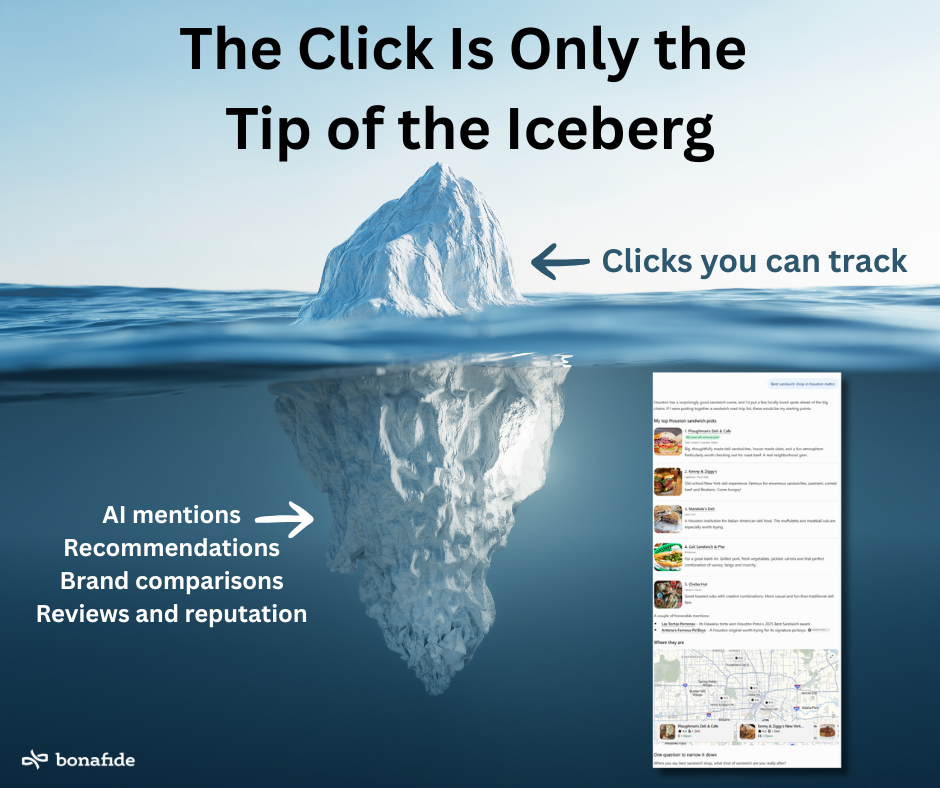
Michael King of iPullRank doesn't dispute the numbers. He disputes what they measure. In his view, these studies grade a branding channel with a performance ruler, much like judging a Super Bowl ad by its click-through rate.
People don't use ChatGPT the way they use a search engine. They have a conversation, get an answer and often never click anything. A Pew Research panel he cites found that users clicked a source link inside Google's AI summaries only about 1% of the time. Low referral traffic, in this view, may simply mean the tool is doing its job, while still shaping which brands people consider. King points to surveys suggesting that most people who shop with chatbots have been talked out of a purchase by AI guidance at least once. If your business isn't in the answer, you may be dropped from the shortlist without ever knowing it.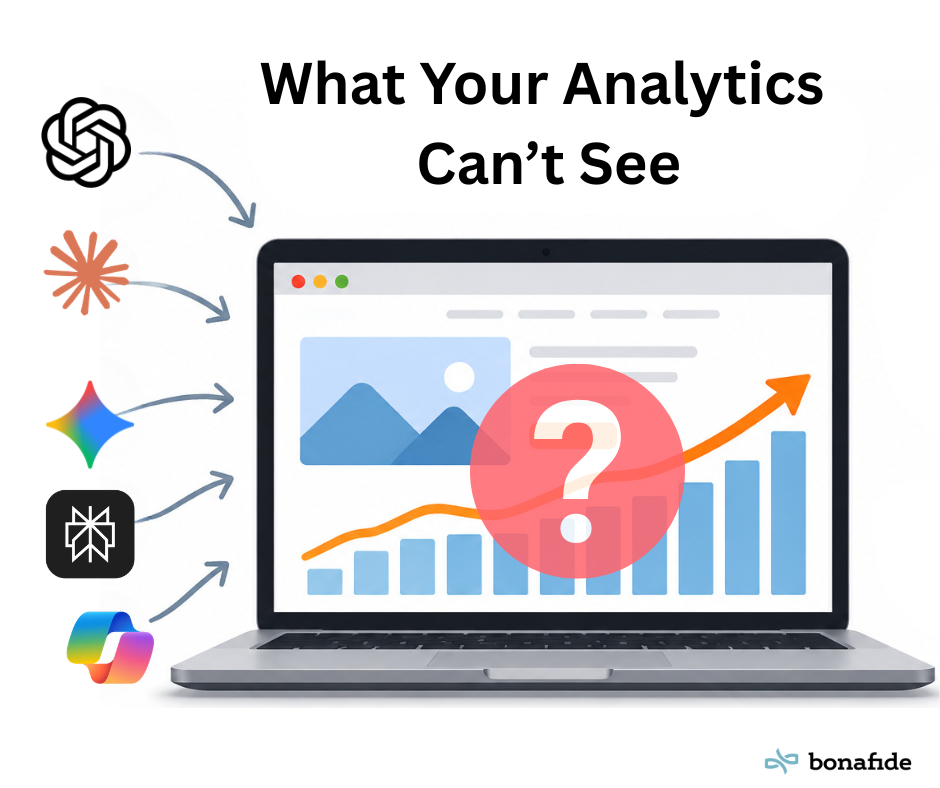 He also highlights measurement gaps. Many AI-influenced visits arrive without a referrer and get counted as "direct." Clicks from Google's AI Overviews and AI Mode are recorded as ordinary Google organic, so the benchmark these studies use already contains AI search. Even The SEO Works notes its AI figures should be read as a floor.
The fair caveat: much of the evidence for AI's influence comes from self-reported, vendor-funded surveys. King acknowledges this, arguing that it's how brand channels like TV and PR have always been measured.
What this means for small and mid-sized businesses
The two camps agree on more than the headlines suggest. Here's where that common ground points:
- Don't neglect Google. Every study agrees Google remains the dominant source of customers, and its AI Overviews and AI Mode are where AI search affects most small businesses today.
- Good SEO and AI visibility are largely the same work. The SEO Works found that sites gaining AI traffic were the same ones improving in organic search. Clear, consistent information about who you are, what you offer and where you serve helps you in both.
- Track conversions before anything else. If you can't see which channels produce leads, you can't judge any of this.
- Ask customers how they found you. A "How did you hear about us?" field on your forms, with AI tools as an option, captures influence that analytics can't. Indig recommends exactly this kind of self-reported attribution.
- Build your reputation beyond your website. AI tools draw heavily on reviews, directories, local press and industry mentions. Accurate listings and earned coverage pay off in search results and AI answers alike.

The bottom line
Is AI visibility a distraction? As a source of website traffic for most small businesses today, largely yes. As a place where customers form opinions about you, probably not. Both things can be true at once.
At the end of the day, good marketing should focus on people, not algorithms. Accurate, useful content that answers real questions and reflects what a business actually offers is still the foundation, whether we're talking about traditional SEO or AI visibility.
My concern is that some marketers are using the uncertainty around AI to convince businesses they need entirely new strategies, specialized keyword tactics or expensive optimization services just to stay relevant. We're seeing questionable practices from the early days of SEO repackaged for AI, despite limited evidence that many of these tactics actually work.
That's not to say AI visibility doesn't matter. It does, and it's changing how people search for and find information. But there's still a lot we don't know, particularly about how to measure visibility consistently and what actually influences AI-generated recommendations.
The best approach for small businesses is to build on what we already know works, pay attention to how search behavior is changing, and make adjustments based on real results. Don't ignore AI, but don't let fear of falling behind drive your marketing decisions either.